
What is cradle cap?
Cradle cap usually appears in the first two or three months of life. You see yellow, white or brownish scales on the scalp, which can be greasy or dry and crusty, sometimes with a little redness underneath. It can spread to the eyebrows, behind the ears and the nappy area.
Its medical name is infantile seborrhoeic dermatitis: it’s the baby version of seborrhoeic dermatitis. It isn’t itchy or painful, it isn’t catching, and it has nothing to do with how often you bath your baby.
The short answer
Cradle cap is greasy, yellowish, crusty patches on a baby’s scalp. It’s very common, harmless, and doesn’t usually bother the baby. It normally clears on its own within weeks or months. Gentle washing, softening and brushing can help it go sooner.
What causes cradle cap?
The exact cause isn’t known. It’s thought to be linked to:
- Oil glands in a baby’s skin being more active in the first months, possibly from the mother’s hormones before birth
- A natural yeast on the skin, which thrives on that oil
- Skin cells building up and sticking together rather than shedding
It isn’t caused by poor hygiene, an allergy or an infection.
Is it cradle cap or something else?
Cradle cap doesn’t usually itch. If your baby is scratching or rubbing their head, has red, dry, itchy patches elsewhere on the body, or the skin is weeping, it may be eczema.
In older children, a scaly scalp with broken hairs or patches of hair loss is more likely to be scalp ringworm, which needs treatment from a GP.
How to get rid of cradle cap
Cradle cap will usually go on its own, but these steps can help it clear sooner:
- Wash your baby’s hair regularly with a mild, fragrance-free baby shampoo.
- Soften the crusts first: rub in a little baby oil or plain emollient, leave it for a few hours or overnight, then wash it off.
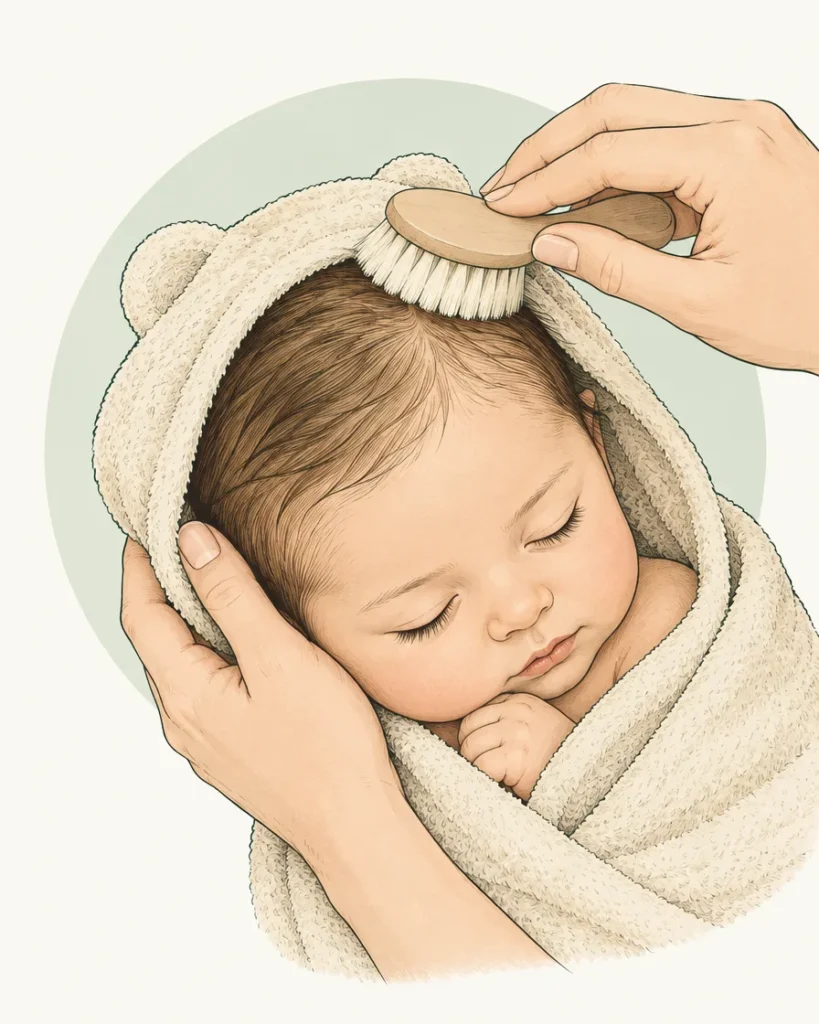
- Gently brush the scalp with a soft baby brush or cloth to loosen the flakes.
- Be patient: it can take a few weeks, and it may come back.
What not to do
- Don’t pick or scratch the crusts, as it can cause bleeding and infection.
- Don’t use adult shampoos, anti-dandruff or medicated products unless your GP or pharmacist advises it.
- Avoid nut oils, such as peanut or almond oil, on a baby’s skin.
When to see a GP
Speak to your GP or health visitor if:
- the crusts don’t improve after a few weeks of home care
- it spreads to other parts of the body
- the skin looks red, swollen, hot, or is bleeding or leaking fluid
- your baby seems itchy or uncomfortable
- your baby is unwell, or you’re worried
A pharmacist can also advise, and a GP may suggest a gentle medicated cream or shampoo for stubborn cases.
Cradle cap in older children
Most babies have grown out of cradle cap by their first birthday, though it sometimes lasts longer or comes back in toddlers.
If a child over a year old has a persistently flaky, scaly or itchy scalp, it’s worth finding out what it is. It may still be seborrhoeic dermatitis, but eczema, psoriasis and ringworm are possibilities too, and they’re treated differently.
Do you need a trichologist?
Not for most babies. Cradle cap is harmless and usually clears with gentle care at home, with your health visitor, pharmacist or GP if needed.
I see older children whose scalp is still scaly or flaky, or where the diagnosis isn’t clear. I examine the scalp gently, at a pace that suits your child, and give you a simple routine to follow at home.
Questions about cradle cap
If yours isn’t here, send me a message and I’ll get back to you.
Is cradle cap harmful?
No. Cradle cap is harmless and doesn’t usually bother your baby. It’s a cosmetic problem that clears on its own.
How long does cradle cap last?
Usually a few weeks to a few months. Most babies have grown out of it by the time they’re one.
Can cradle cap cause hair loss?
Some hairs may come away with the scales, but they grow back. Cradle cap doesn’t damage the hair follicles.
Is cradle cap caused by not washing my baby’s hair?
No. It isn’t caused by poor hygiene. Regular gentle washing does help keep the scales down.
Can I use olive oil on cradle cap?
Baby oil or a plain emollient is usually recommended. Ask your health visitor or pharmacist which suits your baby’s skin, and avoid nut oils.
Can adults get cradle cap?
Adults don’t get cradle cap, but they can get seborrhoeic dermatitis, which is the same condition in adults. Seborrhoeic dermatitis.
Let’s find out what’s going on
Book online at a time that suits you. If you have a question first, send me a message.