
What is seborrhoeic dermatitis?
Seborrhoeic dermatitis affects the oiliest parts of the skin, where there are most sebaceous glands. The scalp is the most common place, but it often appears on the eyebrows, the sides of the nose, around the ears, along the hairline and in a beard as well.
It’s the same process as dandruff, but stronger: the skin reacts to a natural yeast called Malassezia, becomes inflamed and sheds faster. It tends to come and go for years, often flaring with stress or in winter.
Many people who come to me say they have dandruff or a dry scalp. Sometimes that’s right; often it’s seborrhoeic dermatitis, and it needs a different approach.
The short answer
Seborrhoeic dermatitis, also called seborrhoeic eczema, is a common skin condition that causes red, itchy patches with greasy, yellowish or white scales. On the scalp it looks like stubborn dandruff. It’s linked to a yeast that lives on the skin. It can’t be cured, but the right routine keeps it under control.
Seborrhoeic dermatitis on the scalp
You may notice:
- Greasy, yellowish or white scales, which can stick to the scalp
- Red or pink patches, which can look darker or lighter than your skin on brown or black skin
- Itching, sometimes with soreness or burning
- Flaking along the hairline, behind the ears or on the eyebrows
- Symptoms that settle, then flare up again
In babies, the same condition is called cradle cap: thick, yellow, crusty patches that are harmless and usually clear on their own.
Thick, raised, silvery-scaly patches with clear edges are more likely to be scalp psoriasis. The two can be hard to tell apart, and some people have features of both.
A red, itchy scalp after using a new dye or product may be contact dermatitis, an allergic or irritant reaction.
What causes seborrhoeic dermatitis?
The exact cause isn’t known. It isn’t an allergy, it isn’t caused by poor hygiene and it isn’t catching. The skin over-reacts to Malassezia, a yeast that lives on everyone’s skin, and some people are simply more prone to it. It’s more common in men. These are the things that most often set off a flare:
Stress and tiredness
Flares often follow a stressful period, poor sleep or being run down.
Cold, dry weather
Most people are worse in winter and better in summer, when sunlight helps the skin.
Leaving it too long between washes
Oil and scale build up and feed the yeast, so symptoms come back faster.
Heavy oils and products
Oils left on the scalp feed the yeast, and some styling products irritate inflamed skin.
Illness and some medicines
Being unwell, some long-term conditions and some medicines can make it more likely or more severe.
Alcohol-based products on the face
Harsh toners and aftershaves can make facial patches flare.
Seborrhoeic dermatitis shampoo and routine
Treatment controls the yeast, calms the inflammation and removes scale. A medicated shampoo is the place to start.
- Ketoconazole shampoo is an antifungal that targets the yeast. It’s available from pharmacies and on prescription.
- Coal tar shampoo slows down skin turnover and eases itching.
- Salicylic acid loosens thick, stuck-on scale so other treatments can reach the skin.
- Zinc pyrithione and selenium sulfide shampoos help milder flaking.
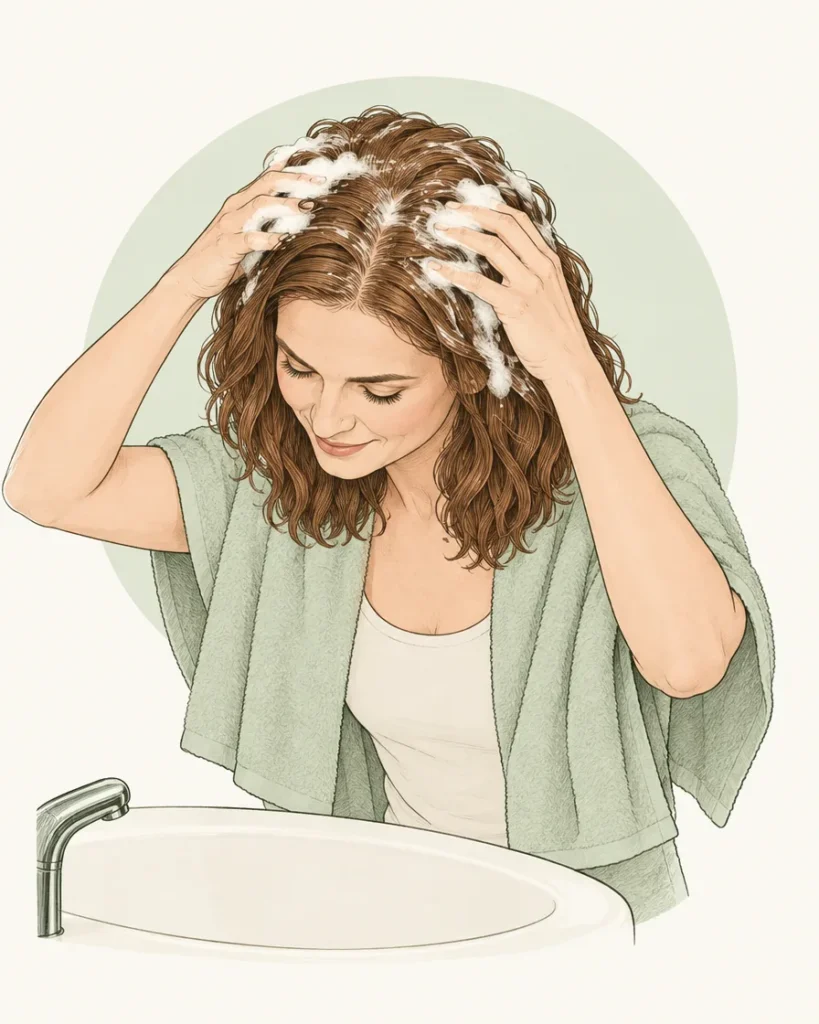
Massage the shampoo into your scalp and leave it on for a few minutes before rinsing. Use it two or three times a week until your scalp is calm, then once a week or so to keep it that way. Wash with a gentle shampoo in between, and rinse well.
Seborrhoeic dermatitis treatment
There’s no cure, but most people get good control. The aim is a calm scalp with as little effort as possible.
A diagnosis first
Seborrhoeic dermatitis, psoriasis, dandruff and product reactions overlap, and the right treatment depends on which it is.
A routine you can keep to
How often you wash, what with and how long you leave it on make more difference than any single product. Your plan sets this out.
Lifting the scale
Thick scale stops treatments reaching the skin. Softening and gently lifting it, without picking or scraping, helps everything else work.
Calming a flare
For a bad flare, a GP may prescribe a short course of a steroid scalp lotion or an antifungal. I can write to your GP when that’s needed.
The face and ears
Patches on the face are treated with a gentle cleanser and an antifungal cream. Steroid creams should only be used on the face for short periods, as advised by your GP.
Staying in control
It tends to come back. Using your medicated shampoo regularly, before it flares, keeps most people comfortable.
Can seborrhoeic dermatitis cause hair loss?
It can add to it, but it doesn’t usually cause hair loss on its own. A very inflamed scalp can bring on extra shedding, and scratching and picking at scale break hairs and pull out loose ones. This hair loss is temporary and grows back once the scalp is calm.
Seborrhoeic dermatitis is common, so it often turns up alongside another kind of hair loss, such as telogen effluvium or female pattern hair loss. If your hair is getting thinner, I look at both, rather than putting it all down to the scalp.
How I can help
At a consultation in Forest Row we spend about an hour together. I examine your scalp closely, and ask about when it started, how it comes and goes, your products and washing routine, stress, health and medication.
You leave with a clear explanation and a written plan: what to wash with, how often, how to treat a flare and how to keep it calm afterwards. If you need prescription treatment, I’ll write to your GP. What happens at a consultation.
When to see your GP first
Please see your GP or call NHS 111 if:
- your hair loss came on suddenly and you feel unwell
- your scalp is very painful, swollen, weeping or bleeding
- you have patches of hair loss with redness or scarring that are spreading quickly
- you think a new medicine may be the cause. Don’t stop it without speaking to your doctor
You can still see me as well. I’ll happily liaise with your GP if further tests are needed.
Questions about seborrhoeic dermatitis
If yours isn’t here, send me a message and I’ll get back to you.
Is seborrhoeic dermatitis the same as dandruff?
They’re closely related. Dandruff is flaking without much redness; seborrhoeic dermatitis is the same process with more inflammation, greasy scale and often patches on the face.
Is seborrhoeic eczema the same as seborrhoeic dermatitis?
Yes. They are two names for the same condition.
Can seborrhoeic dermatitis be cured?
Not permanently, as it tends to come back. But with the right routine most people keep it under control with little effort.
Is seborrhoeic dermatitis contagious?
No. It isn’t an infection, so you can’t catch it or pass it on.
Why does my seborrhoeic dermatitis keep coming back?
Because the tendency stays. Flares often follow stress, illness or winter weather, or happen when you stop using your medicated shampoo.
Is it seborrhoeic dermatitis or psoriasis?
Seborrhoeic dermatitis usually has thinner, greasier, yellowish scale; psoriasis has thicker, silvery scale in raised patches with clear edges. Some people have features of both.
Does diet affect seborrhoeic dermatitis?
There’s no good evidence that a particular diet causes or cures it. A balanced diet and looking after your general health help your skin overall.
Let’s find out what’s going on
Book online at a time that suits you. If you have a question first, send me a message.