What is telogen effluvium?
Telogen effluvium is one of the most common causes of hair loss I see. Hair comes out in much bigger amounts than usual: in the shower, on your brush, on your pillow and on your clothes. It’s frightening, and many women tell me they feel less like themselves.
The good news is that it doesn’t cause baldness and it doesn’t damage the hair follicles. The shedding is a sign that something upset your body a few months ago. Find that cause, and your hair can recover.
Not sure this is what you have? Types and causes of hair loss explains how the common causes differ.
The short answer
Telogen effluvium is heavy hair shedding from all over the scalp. It usually starts two to three months after a trigger such as illness, an operation, childbirth, a crash diet or a stressful time. It’s temporary: once the cause is found and dealt with, the shedding settles and your hair grows back.
Signs of telogen effluvium
- Much more hair coming out than usual, from all over your head
- Handfuls of hair after washing or brushing
- A ponytail that feels noticeably thinner
- Hair that seems to have stopped growing
- Thinner hair at your temples and along your hairline
- No bald patches, and a scalp that looks healthy
Look closely at a shed hair and you’ll often see a tiny white bulb at the root. That’s normal: it shows the hair was resting and came out from the root, rather than breaking. Hairs that snap part-way along are more likely to be hair breakage.
Everyone loses some hair every day, often 50 to 100 hairs. With telogen effluvium you lose noticeably more than that, for weeks or months. Gradual thinning on top with a widening parting is more likely to be female pattern hair loss, and the two often happen together.
Why the shedding starts months later
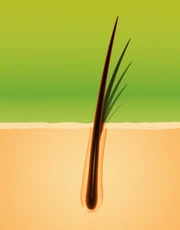
Telogen is the resting stage of the hair growth cycle, and effluvium means shedding. Knowing how the cycle works explains why hair falls out so long after the event that caused it.
Growing
Most of your hairs, around 85 to 90 in every 100, are growing at any one time. Each hair grows for several years.
Resting
The rest are resting. A resting hair stays in place for around three months, then falls out to make way for a new one.
Shedding
A shock to the body pushes many more growing hairs into the resting stage at once. Around three months later, they all shed together.
What causes telogen effluvium?
Almost anything that puts your body under strain can trigger it. Hair isn’t essential for survival, so when your body is under pressure, hair growth is one of the first things it cuts back.
Illness and fever
A high temperature, flu, COVID-19 or any serious illness can trigger shedding a few months later.
Surgery or an accident
An operation, a general anaesthetic, blood loss or an injury is a big shock to the body.
Having a baby
Shedding a few months after birth is very common. Postpartum hair loss.
Diet and weight loss
Crash diets, too little protein and rapid weight loss, including on weight-loss injections, can all trigger it.
Low iron and other deficiencies
Low iron stores, vitamin D or B12 can trigger shedding or keep it going. Blood tests for hair loss.
Hormones and medication
Stopping the pill, a thyroid problem and some medicines, including some antidepressants and blood pressure tablets, can cause shedding.
Sometimes there are two or three triggers at once, and sometimes the trigger isn’t obvious. That’s why I take a full history.
Can stress cause hair loss?
Yes. A bereavement, a relationship ending, money worries, exams or months of pressure at work can all trigger telogen effluvium. Stress hair loss usually shows as heavy shedding all over the head, two to three months after the stressful time.
Stress is also linked to other kinds of hair loss:
- Alopecia areata, round bald patches that appear suddenly
- Trichotillomania, an urge to pull out your own hair
Hair loss is stressful in itself, and that worry can keep the shedding going. Understanding what’s happening, and knowing it will settle, often helps more than anything else. If stress is affecting your health, please speak to your GP too.

How long does telogen effluvium last?
Shedding usually starts two to three months after the trigger. Once the cause has passed or been dealt with, it typically settles within three to six months.
- New growth comes first. Look for short, fine hairs along your hairline and parting. They’re a good sign.
- Length takes longer. Hair grows about a centimetre a month, so it can take a year or more for long hair to look full again.
- It can come back. If a cause such as low iron is never fully put right, shedding can return.
Chronic telogen effluvium
When shedding goes on for longer than six months, it’s called chronic telogen effluvium. It’s most common in women aged 30 to 60, and it can come and go for several years. It still doesn’t cause baldness, but it’s worth checking for an ongoing cause and for female pattern hair loss happening at the same time.
Telogen effluvium treatment
There’s no single treatment that stops telogen effluvium, because the answer depends on the cause. My aim is to find it, deal with it and help you keep it from coming back.
Find the trigger
This is the most important step. If the cause is still there, nothing else will stop the shedding for long.
Put deficiencies right
If tests show low iron stores or vitamins, these are put right with your GP’s help, and kept right so the shedding doesn’t return.
Review medication
If a medicine may be the cause, I’ll write to your GP. Never stop or change a dose without speaking to the person who prescribed it.
Look after your scalp and hair
Keep washing as normal: the hairs that come out were already going to fall. Be gentle, detangle with a wide-toothed comb and limit heat.
Supplements only if you need them
Taking supplements you aren’t short of won’t help your hair and wastes money. Test first.
Help for chronic shedding
If shedding carries on, a doctor may suggest a treatment such as minoxidil. I’ll tell you when that conversation is worth having.
How I find the cause
At a consultation in Forest Row we spend about an hour together. I examine your hair and scalp closely and take a full history, going back over the last six months, because the trigger often happened long before the shedding began.
- illness, operations, accidents and pregnancy
- diet, weight changes and periods
- medication, contraception and HRT
- stressful events at home or at work
Please bring copies of any recent blood tests and a list of your medicines and supplements. A result can be in the normal range but still lower than ideal for hair, so I’ll explain what yours mean. What happens at a consultation.
When to see your GP first
Please see your GP or call NHS 111 if:
- your hair loss came on suddenly and you feel unwell
- your scalp is very painful, swollen, weeping or bleeding
- you have patches of hair loss with redness or scarring that are spreading quickly
- you think a new medicine may be the cause. Don’t stop it without speaking to your doctor
You can still see me as well. I’ll happily liaise with your GP if further tests are needed.
Questions about telogen effluvium
If yours isn’t here, send me a message and I’ll get back to you.
Is telogen effluvium permanent?
No. It doesn’t damage the hair follicles, so hair grows back once the cause is dealt with. Chronic telogen effluvium can come and go for years, but it doesn’t cause baldness.
Will my hair grow back after telogen effluvium?
Yes, in almost all cases. Short new hairs usually appear first along the hairline. If there’s no regrowth after six months or so, it’s worth checking for an ongoing cause or another kind of hair loss.
How much hair loss is normal?
Often 50 to 100 hairs a day, and more on days you wash. What matters is a change from what’s normal for you.
Can children get telogen effluvium?
Yes. In children it usually follows a high fever, an illness, an operation or a poor diet, and it normally recovers on its own. Children’s hair loss.
Does washing my hair make it worse?
No. The hairs you see after washing had already stopped growing and would have fallen anyway. Washing less just means more come out next time.
How is telogen effluvium different from female pattern hair loss?
Telogen effluvium is shedding of full-length hairs from all over the head. Female pattern hair loss is gradual thinning on top, with finer hairs. You can have both at once.
Let’s find out what’s going on
Book online at a time that suits you. If you have a question first, send me a message.