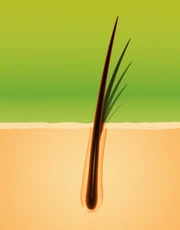
Hair loss always has a cause
Hair loss can creep up slowly or arrive suddenly, and it’s upsetting either way. The good news is that it always has a cause, and once you know what type of hair loss you have, you know what can be done about it.
There are many types of hair loss. Some are temporary and settle once the trigger is dealt with; others are long-term and need managing; a few cause permanent loss, so they need help early. Many look alike, and more than one can happen at the same time.
This guide explains the main hair loss conditions, their types and causes in women, men and children, and links to my detailed guide for each one.
Start with what you’ve noticed
Types of hair loss
Most hair loss falls into one of these groups. The type tells us what’s likely to help.
Pattern hair loss
Gradual, genetic thinning linked to sensitivity to hormones called androgens.
- Female pattern hair loss: thinning across the top of the head and a widening parting, with the front hairline usually kept.
- Male pattern baldness: a receding hairline and thinning at the crown.
- Receding hairline: hair loss at the temples and front: in men usually male pattern hair loss; in women, often frontal fibrosing alopecia or traction alopecia.
- PCOS hair loss: thinning linked to raised androgens in polycystic ovary syndrome.
Shedding
Much more hair falling out than usual, usually all over the head, two to three months after a trigger.
- Telogen effluvium: shedding after illness, surgery, stress, crash dieting or a medication change.
- Postpartum hair loss: shedding in the months after having a baby.
- Menopause hair loss: thinning and loss of volume as oestrogen levels fall.
- Iron deficiency and thyroid hair loss: shedding linked to low iron stores or an under- or overactive thyroid.
Patchy and autoimmune hair loss
Hair loss in patches, where the immune system affects the hair follicles.
- Alopecia areata: smooth, round bald patches that can appear suddenly, in adults and children.
- Alopecia totalis and universalis: loss of all the hair on the scalp, or on the whole body.
Scarring hair loss
Inflammation that damages the follicles, so hair can’t regrow. Early help matters.
- Frontal fibrosing alopecia: a slowly receding hairline, often with eyebrow loss, mostly after the menopause.
- Lichen planopilaris: patches of loss with redness and scaling around the follicles.
- Scarring alopecia: the group of conditions that cause permanent loss.
Damage and pulling
Hair lost or broken because of how it’s styled or handled.
- Traction alopecia: loss along the hairline from tight braids, ponytails, weaves or extensions.
- Trichotillomania: pulling out your own hair, often linked to anxiety, in children, teenagers and adults.
- Hair breakage: hair snapping from heat, bleaching or rough handling, often mistaken for hair loss.
What causes hair loss?
Hair loss causes often overlap, which is why a full history matters as much as looking at your hair.
Genes and hormones
The commonest cause of thinning in both women and men. Hormonal changes after pregnancy, around the menopause and with PCOS play a big part too.
Illness, stress and surgery
A high fever, an operation, COVID-19, a bereavement or a stressful period can trigger shedding a few months later.
Diet and deficiencies
Low iron, vitamin D or protein, crash diets and rapid weight loss, including on weight-loss injections, can all affect hair. Blood tests for hair loss.
Thyroid and other conditions
An under- or overactive thyroid, autoimmune conditions and some long-term illnesses can cause hair loss.
Medication
Some medicines list hair loss as a side effect. Never stop a medicine without speaking to your doctor.
Styling and scalp problems
Tight hairstyles, heat, chemical treatments and an inflamed scalp can all lead to hair loss or breakage.
Hair loss in women, men and children
Hair loss in women
The most common causes of hair loss in women are female pattern hair loss, shedding after illness or childbirth, low iron, thyroid problems and the menopause. Women often notice a thinner ponytail or more scalp showing at the parting.
Hair loss in men
Most hair loss in men is male pattern baldness, but sudden shedding, patches or a sore scalp point to other causes that are worth checking.
Hair loss in children and teenagers
In children, patchy hair loss, hair pulling and scalp infections are most common. In teenagers, hormones, diet and stress often play a part. I see children with a parent or guardian, and hold a current DBS check.
Children’s and teenage hair loss · Traction alopecia and Afro hair · Hair loss after cancer treatment
Your eyebrows can be a clue
Thinning eyebrows often have the same cause as hair loss on the head, such as a thyroid problem, alopecia areata or frontal fibrosing alopecia, so I look at them as part of a hair loss consultation. If eyebrow loss is your only concern, please see your GP first. Why eyebrows fall out.
Can hair loss be stopped or reversed?
It depends on the type, which is why a diagnosis comes first.
- Shedding such as telogen effluvium usually recovers once the trigger is found and dealt with, though regrowth takes months.
- Pattern hair loss can’t be cured, but it can often be slowed, held and sometimes improved with the right treatment, started early.
- Alopecia areata often regrows, but it can come and go.
- Scarring hair loss can’t regrow where follicles are lost, so the aim is to calm the inflammation and protect the hair you have.
Be wary of anything sold as a cure for baldness. There isn’t one product that helps everyone: one cap doesn’t fit all, so your advice and treatment should be made for you.
How I find the cause of your hair loss
At a consultation we spend about an hour together. I take a full history, including your health, diet, medication, stress, family background and how the problem started, and I examine your hair and scalp closely.
If tests would help, I’ll liaise with your GP or you can have them done privately. You leave with a clear explanation and a written plan made for you. What happens at a consultation.
When to see your GP first
Please see your GP or call NHS 111 if:
- your hair loss came on suddenly and you feel unwell
- your scalp is very painful, swollen, weeping or bleeding
- you have patches of hair loss with redness or scarring that are spreading quickly
- you think a new medicine may be the cause. Don’t stop it without speaking to your doctor
You can still see me as well. I’ll happily liaise with your GP if further tests are needed.
Questions about hair loss
If yours isn’t here, send me a message and I’ll get back to you.
What causes hair loss in women?
Most often female pattern hair loss, or shedding after illness, stress or childbirth. Hair loss in women.
Can stress cause hair loss?
Yes. A stressful time can trigger shedding two to three months later, which usually settles. Stress and telogen effluvium.
What are the main types of hair loss?
Pattern hair loss, shedding (telogen effluvium), patchy autoimmune hair loss such as alopecia areata, scarring hair loss, and hair loss from damage or pulling, such as traction alopecia and breakage.
Is hair loss permanent?
Often not. Shedding usually recovers once the cause is dealt with. Pattern hair loss can be managed, and only scarring hair loss is permanent, which is why early help matters.
Let’s find out what’s going on
Book online at a time that suits you. If you have a question first, send me a message.