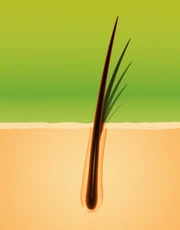

What is traction alopecia?
Every time hair is pulled tight, the follicles are put under strain. Over months and years, constant tension makes them inflamed, then weaker, and the hairs they grow become finer and fewer. The hairline, temples, the area above the ears and the nape take the most strain.
Anyone who wears tight styles can get it, whatever their hair type, including children, ballet dancers, athletes and people who wear wigs or extensions. It’s especially common with Afro-textured hair, where braids, weaves and protective styles are worn for long periods.
The short answer
Traction alopecia is hair loss caused by hairstyles that pull on the hair for a long time, such as tight ponytails, braids, weaves and extensions. It usually affects the hairline and temples. Caught early, the hair grows back once the pulling stops. Left too long, the follicles scar and the loss becomes permanent.
Signs of traction alopecia
- Thinning at the hairline, temples or above the ears
- Soreness, headaches or tightness after a new style
- Small red bumps or pimples around the hairs where they’re pulled
- Short, broken hairs along the edges
- A fringe of fine hairs left at the very front, with thinning behind it
- Smooth, shiny skin where hair used to grow, in long-standing cases
Pain or soreness after styling is the earliest warning sign. If a style hurts, it’s too tight.
Thinning along the hairline has other causes too, including frontal fibrosing alopecia and, at the crown, central centrifugal cicatricial alopecia (CCCA). Pulling hair out by hand is a different condition, trichotillomania.
What causes traction alopecia?
Any style that pulls on the hair can cause it. The tighter the style, the longer it stays in and the more often it’s repeated, the higher the risk.
Tight ponytails and buns
Especially when worn in the same place every day, or slicked back with gel.
Braids, cornrows and twists
Tight installation, heavy braids and wearing them for months without a break.
Weaves, extensions and wigs
Sewn-in or glued extensions, clip-ins and tight wig bands or adhesives.
Locs
Heavy or long locs pull on the roots, particularly when retwisted tightly.
Chemical treatments
Relaxers and bleach weaken the hair, so tension does more damage when they’re combined.
Rollers, headbands and grips
Anything worn tightly and often, including tight headwraps and grips in the same spot.
Can traction alopecia grow back?
Yes, if it’s caught early. While the follicles are still alive, hair usually starts to grow back within a few months of stopping the tension. If the pulling has gone on for years, scarring can set in, and hair in those areas won’t return.
- Take the tension away. Loosen or remove tight styles, and give your hairline a rest. This is the most important step.
- Choose lower-tension styles: looser braids, lighter extensions, and changing where you tie your hair.
- Protect the edges. Avoid gels, grips and brushes pulling at the hairline while it recovers.
- Calm the scalp. Red, sore or bumpy areas need settling before regrowth can start.
- Get scarring checked. If the skin looks smooth and shiny, see a dermatologist to confirm what can regrow.
A doctor may also suggest a treatment such as minoxidil to support regrowth where follicles are still active. Hair grows about a centimetre a month, so be patient.
Afro hair and scalp care
Afro-textured hair is beautiful and versatile, but its tight curl pattern makes it more fragile, and many popular styles put tension on the edges. A few changes protect the hairline without giving up the styles you love:
- Ask for braids, twists and cornrows to be installed without pulling, and say if it hurts
- Keep heavy extensions and weaves in for weeks rather than months, with breaks in between
- Leave the edges loose or out of the style where you can
- Space out relaxers, and never relax hair that’s already under tension
- Keep oils and heavy butters to the lengths: oil left on the scalp can feed seborrhoeic dermatitis and cause flaking
- Cleanse the scalp regularly, even under protective styles
Thinning that starts at the crown and spreads outwards is not traction. It may be central centrifugal cicatricial alopecia, a scarring condition that needs early diagnosis. Scarring alopecia · Hair breakage.
How I can help
At a consultation in Forest Row I examine your hairline and scalp closely to see how much is traction, whether the follicles are still active, and whether anything else, such as CCCA or frontal fibrosing alopecia, is involved.
We go through your styles, products and routine, and you leave with a written plan for protecting your hairline and supporting regrowth, including styles that work for your hair type. All hair types are welcome. What happens at a consultation.
When to see your GP first
Please see your GP or call NHS 111 if:
- your hair loss came on suddenly and you feel unwell
- your scalp is very painful, swollen, weeping or bleeding
- you have patches of hair loss with redness or scarring that are spreading quickly
- you think a new medicine may be the cause. Don’t stop it without speaking to your doctor
You can still see me as well. I’ll happily liaise with your GP if further tests are needed.
Questions about traction alopecia
If yours isn’t here, send me a message and I’ll get back to you.
Is traction alopecia permanent?
Not at first. Early traction alopecia usually grows back once the tension stops. After years of pulling, scarring can make it permanent.
How long does it take for traction alopecia to grow back?
New hairs often appear within two to four months of stopping the tension. Filling in the hairline can take a year or more.
Can children get traction alopecia?
Yes. Tight school ponytails, buns and braids can cause it, and children’s hairlines are delicate. Looser styles usually let it recover.
Do helmets or hats cause traction alopecia?
No, a well-fitting helmet or hat doesn’t. Tight styles worn underneath them can, so wear hair loose or low under a helmet.
Can I still wear braids?
Yes, if they’re not tight, not too heavy, and you give your hair breaks between styles. Soreness after installation means they’re too tight.
Let’s find out what’s going on
Book online at a time that suits you. If you have a question first, send me a message.