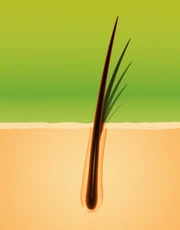

What is male pattern baldness?
Male pattern baldness, also called male pattern hair loss or androgenetic alopecia, is the most common type of hair loss in men. Most men have some by the time they’re 50, and it can start any time after puberty.
Hair in the affected areas grows back a little finer and shorter with each cycle, until some follicles stop producing visible hair. The hair at the sides and back of the head isn’t sensitive, which is why it usually stays.
Some men come to me sure they’re going bald when the cause is something else; others have been told it’s stress when it’s clearly pattern loss. It’s worth knowing which, because the answer changes what helps.
The short answer
Male pattern baldness is inherited, gradual hair loss at the temples and crown. Hair follicles there are sensitive to a hormone called DHT, and slowly shrink. It’s not caused by hats, shampoo or poor circulation. It can’t be cured, but treatment can slow it down, and starting early keeps more hair.
Early signs of male pattern baldness
- A hairline that’s moving back at the temples
- A thinner patch at the crown, often noticed in photos or under bright lights
- Hair on top that’s finer, shorter and harder to style
- More scalp showing through when hair is wet
- A slow change over months and years, not sudden
You know your own hair better than anyone, so you may see a difference long before other people do.
A sudden bald patch, hair coming out in handfuls, or a red, sore scalp is not typical of male pattern baldness. These point to something else, such as alopecia areata or telogen effluvium.
The Norwood scale
Trichologists and doctors describe male pattern hair loss using the Norwood scale, which has seven stages. Not everyone goes through every stage, and the speed varies enormously between men.
Early stages
The hairline moves back slightly at the temples, often into an M shape. Hair may feel finer and harder to style.
Middle stages
The temples recede further and a thin patch appears at the crown. The two areas slowly get closer.
Advanced stages
The front and crown join, leaving hair in a horseshoe around the sides and back.
What causes male pattern baldness?
Two things together: your genes and DHT (dihydrotestosterone), a hormone made from testosterone. Follicles on the top of the head that are genetically sensitive to DHT gradually shrink.
It isn’t caused by having too much testosterone. Most men with pattern hair loss have normal hormone levels; their follicles are simply more sensitive. That’s why two healthy men of the same age can have very different amounts of hair.
The genes can come from either side of the family, not only your mother’s.
What doesn’t cause it
- Hats and caps. They don’t starve follicles of air or cause baldness.
- Shampoo or washing often. The hairs in the plughole were already going to fall.
- Poor circulation. Scalp massage feels good but can’t change genetic sensitivity.
- Hair gel and wax. Styling products don’t cause pattern loss, unless you’re allergic to an ingredient.
- Shaving your head. It doesn’t make hair grow back thicker.
Can it start in your teens or 20s?
Yes. Male pattern hair loss can start any time after puberty, and many men notice the first changes in their late teens or early 20s. Starting young doesn’t mean you’ll lose all your hair quickly, but it is a good reason to understand what’s happening early, while there’s the most hair to keep.
Young men are also more likely to have shedding from stress, illness, diet or weight loss, which can look similar. Hair loss in teenagers.
Male pattern baldness treatment
There’s no cure, but treatment can stop or slow hair loss for most men, and regrow some hair. The earlier you start, the more hair there is to keep.
I can tell you whether treatment is likely to help you and what to expect, and write to your GP. Treatments for hair loss aren’t usually available on the NHS, so most men get them from a pharmacy or a private prescriber.
Minoxidil
A lotion or foam applied to the scalp twice a day, from a pharmacy. It can slow loss and regrow some hair, especially at the crown. It takes four to six months to work, and the benefit fades if you stop. Minoxidil myths and facts.
Finasteride
A daily tablet, on prescription, that lowers DHT. It can stop or slow loss in most men. Side effects can include sexual problems and, rarely, low mood. Read the patient card, and speak to your prescriber if you notice changes. Pregnant women should not handle crushed tablets.
Using both
Minoxidil and finasteride work in different ways and are often used together.
Hair transplant
Surgery moves follicles from the back of the head to thinning areas. It works best when loss has stabilised, and medication is usually still needed to protect the remaining hair. Choose a surgeon registered with the GMC.
Scalp micropigmentation
Tiny tattooed dots that look like short stubble, for men who prefer a shaved look with a fuller hairline.
Owning it
A shorter cut or a clean shave suits many men, and it’s a perfectly good choice.
How I can help
At a consultation in Forest Row I examine your hair and scalp closely, comparing the hair on top with the sides and back, and take a full history: your family, health, diet, stress and anything you’ve already tried.
- Confirming whether it’s pattern hair loss, or something else
- Honest advice on which treatments are worth it for you
- A scalp and hair routine, and styling tips to make the most of your hair
When to see your GP first
Please see your GP or call NHS 111 if:
- your hair loss came on suddenly and you feel unwell
- your scalp is very painful, swollen, weeping or bleeding
- you have patches of hair loss with redness or scarring that are spreading quickly
- you think a new medicine may be the cause. Don’t stop it without speaking to your doctor
You can still see me as well. I’ll happily liaise with your GP if further tests are needed.
Questions about male pattern baldness
If yours isn’t here, send me a message and I’ll get back to you.
Is male pattern baldness inherited from your mother?
Not only. The genes involved come from both sides of the family, so look at your father’s side as well as your mother’s.
Can male pattern baldness be reversed?
Not fully, but treatment can stop or slow it for most men and regrow some hair, especially when started early.
Does wearing a cap cause baldness?
No. Hats and caps don’t cause male pattern hair loss.
Does shaving your head make hair grow back thicker?
No. Shaving cuts the hair at the surface and doesn’t change the follicle, so it grows back the same.
Can stress cause male pattern baldness?
Stress doesn’t cause it, but it can trigger shedding that makes thinning more noticeable, and the two often happen together.
At what age does male pattern baldness start?
Any time after puberty. Many men notice the first changes in their 20s or 30s.
Is a receding hairline always male pattern baldness?
Usually, but not always. Tight styles, and rarer conditions such as frontal fibrosing alopecia, can also affect the hairline, so it’s worth having it checked if it’s changing fast.
Let’s find out what’s going on
Book online at a time that suits you. If you have a question first, send me a message.