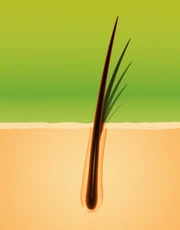
What is scalp psoriasis?
Psoriasis is a long-term skin condition. Normally skin cells are replaced over three to four weeks; with psoriasis it happens in a few days, and the extra cells pile up into patches called plaques. About half of people with psoriasis have it on their scalp, and for some it’s the only place.
It can be a small patch you can hide under your hair, or it can cover the whole scalp and spread past the hairline onto the forehead, behind the ears and the back of the neck. It tends to come and go, with flare-ups and calmer spells.
Scalp psoriasis is often mistaken for dandruff or seborrhoeic dermatitis, and the treatment is different, so it’s worth knowing which you have.
The short answer
Scalp psoriasis causes raised, scaly patches on the scalp, often with itching or soreness. It happens because the immune system speeds up the growth of skin cells, so they build up into thick scale. It isn’t catching. It can’t be cured, but treatment can clear the scale and keep it under control.
Signs of scalp psoriasis
- Raised, well-defined patches with thick, silvery-white scale
- Red or pink patches on white skin; on brown or black skin they can look purple, grey or dark brown
- Itching, which can be intense
- Soreness, burning or a tight feeling
- Scale that sticks to the hair, and may crack or bleed if picked
- Patches that spread past the hairline or behind the ears
Psoriasis scale is thicker than dandruff and sits on raised, clearly edged plaques. If you’re not sure which you have, Scalp conditions compares dandruff, seborrhoeic dermatitis and psoriasis side by side.
You may also have psoriasis elsewhere: on your elbows, knees or lower back, or as pitted or thickened nails. If you have psoriasis and painful, swollen or stiff joints, tell your GP, as it can be a sign of psoriatic arthritis.
What causes scalp psoriasis?
Psoriasis runs in families, and it starts when the immune system becomes overactive. It often first appears in the teenage years or the twenties. It isn’t caused by poor hygiene, and you can’t catch it. These are the things that most often set off a flare:
Stress
One of the most common triggers of a flare, and having psoriasis can be stressful in itself.
Infections
A throat infection can trigger psoriasis, especially in children and young people.
Injury to the skin
Scratching, picking, harsh brushing and scraping off scale can make psoriasis appear where the skin was damaged.
Cold, dry weather
Many people are worse in winter.
Alcohol and smoking
Both are linked to more frequent and more severe psoriasis.
Some medicines
Some medicines can trigger or worsen it. Never stop a prescribed medicine without speaking to your doctor first.
Scalp psoriasis shampoo and care at home
Medicated shampoos help, but on thick psoriasis they work best once the scale has been softened and lifted.
- Coal tar shampoo slows skin cell growth and eases itching and scaling.
- Salicylic acid softens and loosens thick scale. Leave it on as directed, then gently comb the loose scale out with a fine-toothed comb.
- Massage shampoo into the scalp and leave it for a few minutes before rinsing.
- Don’t pick, scratch or scrape at plaques: damaged skin can flare and become infected.
- Keep hair dryers on a cool setting, and be gentle with brushes and tight styles.
Medicated shampoos from a pharmacy are a good start, but they’re rarely enough on their own for moderate psoriasis.
Scalp psoriasis treatment
There’s no cure, but most people can clear or greatly reduce their scalp psoriasis. Treatment works best when your scalp care and any prescribed treatment work together.
Steroid scalp treatments
A GP usually starts with a strong steroid scalp lotion, gel or mousse for up to four weeks. Used as prescribed, it works well and is safe.
Vitamin D-based treatments
If steroids alone aren’t enough, a GP may add a vitamin D-based treatment, sometimes combined with a steroid in one product.
Lifting the scale
Thick scale stops treatments reaching the skin. Softening and gently lifting it first helps everything work better.
A routine made for you
How you wash, what with and how often all matter. Your plan sets out a routine that fits your life, so you keep it up.
Specialist treatment
If psoriasis is severe or isn’t controlled, a dermatologist can offer stronger treatments, including light therapy and tablets or injections.
Staying in control
Psoriasis comes and goes. Knowing your triggers and treating early, at the first sign of a flare, keeps it easier to manage.
Can scalp psoriasis cause hair loss?
It can cause temporary hair loss. Hairs can come away with thick scale, especially when it’s scratched, picked or combed out too firmly, and a badly inflamed scalp can shed more. The hair usually grows back once the psoriasis is under control. Psoriasis doesn’t cause baldness.
If your hair is getting thinner all over, or you have patches of hair loss away from the plaques, something else may be going on as well. I look at your hair as well as your scalp. Types and causes of hair loss.
How I can help
At a consultation in Forest Row we spend about an hour together. I examine your scalp closely, look at how the scale is spread and how inflamed the skin is, and check your hair. I ask about your health, family history, products, washing routine, stress and any treatments you’ve tried.
You leave with a written plan for your scalp and hair care, working alongside any treatment from your GP. Scalp treatments after your consultation can help lift thick scale and calm the scalp at the start. If you need prescribed treatment or a referral, I’ll write to your GP. What happens at a consultation.
When to see your GP first
Please see your GP or call NHS 111 if:
- your hair loss came on suddenly and you feel unwell
- your scalp is very painful, swollen, weeping or bleeding
- you have patches of hair loss with redness or scarring that are spreading quickly
- you think a new medicine may be the cause. Don’t stop it without speaking to your doctor
You can still see me as well. I’ll happily liaise with your GP if further tests are needed.
Questions about scalp psoriasis
If yours isn’t here, send me a message and I’ll get back to you.
Is scalp psoriasis contagious?
No. Psoriasis is an immune condition, not an infection, so you can’t catch it or pass it on.
Does scalp psoriasis itch?
Often, yes. Itching is one of the most common symptoms, and it can be intense. The scalp can also feel sore, tight or burning.
Can scalp psoriasis cause hair loss?
It can cause temporary hair loss where scale is thick or scratched off, but the hair usually grows back once it’s under control. It doesn’t cause baldness.
Can scalp psoriasis be cured?
No, but it can usually be cleared or kept under good control, and many people have long spells with little or no psoriasis.
Can I colour my hair with scalp psoriasis?
Usually, yes, when your scalp isn’t broken or inflamed. Do a patch test first, and avoid colouring during a bad flare, as the chemicals can sting and irritate.
Do you treat teenagers with scalp psoriasis?
Yes. Psoriasis often starts in the teenage years. I see young people with a parent, and we work out a routine they can manage themselves.
Should I put oil on scalp psoriasis?
Oils and emollients can help soften thick scale before washing. Psoriasis isn’t a dry scalp, though, so oil alone won’t treat it.
Let’s find out what’s going on
Book online at a time that suits you. If you have a question first, send me a message.