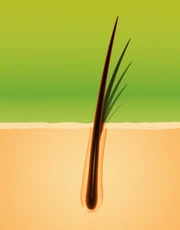

What is scalp folliculitis?
Each hair grows from a tiny pocket in the skin called a follicle. When follicles become inflamed or infected, you get folliculitis. On the scalp it shows up as tender bumps you find when you brush, wash or run your fingers through your hair.
Folliculitis on the scalp is common and usually mild. It can be stubborn, though, and it’s easily mistaken for other scalp conditions. A few rare forms damage the follicles and cause permanent hair loss, which is why spots that won’t settle are worth getting checked.
Not sure what’s causing your spots? Scalp conditions covers the common causes, and red spots on the scalp explains what different spots look like.
The short answer
Scalp folliculitis is inflammation of the hair follicles. It causes small red bumps or white-headed spots around the hairs, which can itch, sting or feel sore. It’s usually caused by bacteria or a yeast that lives on the skin. Mild folliculitis often settles with the right care, but spots that keep coming back need a diagnosis.
Symptoms of scalp folliculitis
- Small red bumps around individual hairs, often in clusters
- White or yellow-headed spots that may burst and crust
- Itching, burning or stinging
- A scalp that feels sore or tender to touch, brush or wash
- Spots that come in crops and keep coming back
- In deeper cases, larger painful lumps or boils
Folliculitis is most common along the hairline, at the back of the head and on the crown, but it can appear anywhere on the scalp. Scratching breaks the skin and lets more bacteria in, so it can easily turn into a cycle.
See your GP the same day if the spots spread quickly, a lump becomes large, hot and painful, or you feel feverish or unwell. These can be signs of a deeper infection that needs treatment.
Is it folliculitis or something else?
Several scalp conditions can look spotty or bumpy. If your symptoms sound more like one of these, the treatment will be different.
| If you notice… | It could be |
|---|---|
| Greasy yellowish flakes and redness, often along the hairline and behind the ears | Seborrhoeic dermatitis |
| Thick, raised, silvery-scaly patches with clear edges | Scalp psoriasis |
| A round, scaly patch with broken hairs, most often in a child | Scalp ringworm |
| Intense itching with tiny eggs stuck close to the roots | Head lice |
| Itching and redness after a new hair dye or product | Contact dermatitis |
What causes folliculitis on the scalp?
Folliculitis starts when a follicle is damaged or blocked, and bacteria or yeast take hold. Knowing which type you have matters, because the treatments are different.
Bacterial folliculitis
The most common type, usually caused by Staphylococcus aureus bacteria getting into a follicle through scratched or broken skin.
Yeast folliculitis
Caused by an overgrowth of Malassezia, a yeast that lives on everyone’s skin. The spots are very itchy and similar in size, and are often worse with heat and sweat.
Irritation and blockage
Heavy oils and styling products, tight hats and helmets, and sweat trapped under them can block and irritate follicles.
Shaving and ingrown hairs
Shaving the head, or a very close clipper cut, can cause razor bumps. On the back of the neck in men with tightly curled hair, this can lead to firm, scarring bumps.
Hot tub folliculitis
Itchy spots that appear a day or two after using a poorly maintained hot tub or pool, caused by bacteria in the water. It usually clears on its own.
Folliculitis decalvans
A rare, long-lasting form that destroys follicles and leaves small patches of scarring hair loss, often on the crown. It needs a dermatologist. Scarring alopecia.
Some people are more prone to it, including those with diabetes, a weakened immune system, eczema or acne, and people taking some medicines, such as steroids. Scratching an itchy scalp from seborrhoeic dermatitis or psoriasis can also start it off.
Is folliculitis contagious?
Bacterial folliculitis can spread, both to other parts of your own skin and, occasionally, to other people. It passes on through shared towels, razors, combs, brushes, pillowcases and hats, rather than by everyday contact.
- Use your own towel, comb and razor, and wash towels and pillowcases on a hot wash
- Clean combs and brushes regularly
- Try not to scratch or pick the spots, and wash your hands after touching them
Folliculitis caused by yeast, irritation or shaving isn’t catching. You don’t need to stay off work or school with folliculitis.
How to treat folliculitis on the scalp at home
Mild scalp folliculitis often clears up on its own within a week or two. These steps help it settle and stop it coming back:
- Wash your hair regularly with a gentle shampoo, and rinse well so no product is left on the scalp
- Hold a clean, warm, damp flannel on sore areas for a few minutes, a few times a day
- Stop shaving or close clipping until the spots have cleared
- Cut back on heavy oils, waxes and dry shampoo, and wash after exercise
- Keep hats and helmet liners clean, and take them off when you can
Which shampoo helps folliculitis?
It depends on the type. A medicated antifungal shampoo, such as one containing ketoconazole, often helps yeast folliculitis, while an antiseptic wash may help the bacterial kind. A pharmacist can advise. The wrong product can irritate an inflamed scalp, so if a shampoo hasn’t helped within a few weeks, it’s time to find out what’s really going on.
Scalp folliculitis treatment
When home care isn’t enough, treatment depends on what’s causing the spots. My aim is to find that cause, calm your scalp and stop it flaring up again.
Find the type and the trigger
I examine your scalp closely and go through your routine, products, hats, shaving and health, to work out what’s keeping it going.
A scalp routine made for you
Your plan sets out how often to wash, what to use and what to stop using. Small changes in routine often make the biggest difference.
Treating the other condition
If seborrhoeic dermatitis, psoriasis or a product reaction is behind the scratching, treating that is what stops the folliculitis.
Antibiotic or antifungal treatment
If spots are widespread, deep or keep returning, your GP may prescribe an antibiotic or antifungal cream, lotion or tablets. I can write to your GP.
Care for scarring forms
Folliculitis decalvans needs early referral to a dermatologist, to stop further hair loss. I’ll tell you if I see signs of scarring.
Keeping it away
Folliculitis often comes back. A routine you can stick to, and knowing your triggers, keeps it under control.
How I can help
Scalp spots are easily misdiagnosed, and many people have tried several shampoos before they see me. At a consultation in Forest Row we spend about an hour together.
- A close look at your scalp and hair
- A full history: when the spots started, your products, hair care, hats, shaving, health and medication
- A clear explanation of what you have and what’s triggering it
- A written plan, and a letter to your GP if you need prescribed treatment
Please bring a list of the shampoos and products you use, and any treatments you’ve already tried. What happens at a consultation.
When to see your GP first
Please see your GP or call NHS 111 if:
- your hair loss came on suddenly and you feel unwell
- your scalp is very painful, swollen, weeping or bleeding
- you have patches of hair loss with redness or scarring that are spreading quickly
- you think a new medicine may be the cause. Don’t stop it without speaking to your doctor
You can still see me as well. I’ll happily liaise with your GP if further tests are needed.
Questions about scalp folliculitis
If yours isn’t here, send me a message and I’ll get back to you.
Does folliculitis cause hair loss?
Usually not. Most scalp folliculitis is superficial and the hair grows back normally once it settles. Deep or repeated infection, and folliculitis decalvans, can scar the follicles and cause permanent hair loss, so get spots that keep coming back checked.
Will scalp folliculitis go away on its own?
Mild folliculitis often clears within a week or two. If it lasts longer, keeps returning or is spreading, it needs a diagnosis and the right treatment.
Why does my scalp folliculitis keep coming back?
Usually because the trigger is still there: a product, a hat, shaving, sweat or another scalp condition that makes you scratch. Finding it is the key to stopping it.
Should I pop the spots?
No. Squeezing or picking pushes infection deeper, spreads it and can leave scars. A warm compress is kinder and safer.
Is scalp folliculitis the same as scalp acne?
They look alike and the names are often used for the same thing. True acne starts with blocked pores and blackheads, while folliculitis is centred on the hair follicle and is usually caused by bacteria or yeast.
What is folliculitis decalvans?
A rare scarring form of folliculitis. Repeated crops of pustules destroy follicles, often leaving several hairs growing from one opening, called tufting. It needs early treatment from a dermatologist.
Can children get folliculitis?
Yes, though spots on a child’s scalp are also often caused by head lice or ringworm. If you’re not sure, get them checked by your GP or pharmacist.
Let’s find out what’s going on
Book online at a time that suits you. If you have a question first, send me a message.