Plain-English explanations of 98 hair, scalp and trichology terms used on this site and in the clinic. Where a term has its own page, follow the link for more.
A
Alopecia: The medical word for hair loss, from any cause, on the scalp or body. See Hair loss.
Alopecia areata: An autoimmune condition in which the immune system attacks hair follicles, causing smooth, round patches of hair loss. The follicles aren’t destroyed, so hair can regrow.
Alopecia totalis: A severe form of alopecia areata in which all the hair on the scalp is lost.
Alopecia universalis: The most extensive form of alopecia areata, with loss of all hair on the scalp, face and body.
Anagen: The growing phase of the hair cycle. On the scalp it usually lasts two to six years, which decides how long your hair can grow.
Anagen effluvium: Sudden loss of growing hairs, most often caused by chemotherapy. See Hair loss and cancer treatment.
Androgenetic alopecia: The medical name for male and female pattern hair loss: inherited thinning in which follicles gradually shrink in response to androgens. See Female pattern hair loss.
Androgens: Hormones such as testosterone and DHT. Men and women both make them, in different amounts.
Autoimmune hair loss: Hair loss caused by the immune system attacking the hair follicles, as in alopecia areata, lichen planopilaris and discoid lupus.
B
Biotin: A B vitamin often sold for hair. Deficiency is rare, and extra biotin doesn’t help hair if your levels are normal. High doses can upset some blood test results. See Vitamins for hair growth.
Breakage: Hairs snapping along their length rather than falling out from the root. Often caused by heat, colour, bleach or rough handling.
Build-up: Products, oil and skin that collect on the scalp and hair. It can make the scalp itchy or greasy and weigh hair down, but it doesn’t stop hair growing.
Bulb: The rounded base of the hair follicle, where cells divide to make the hair.
C
Catagen: A short transition phase of two to three weeks between growing and resting, when the hair stops growing.
CCCA: Central centrifugal cicatricial alopecia: a scarring hair loss that starts at the crown and spreads outwards, mostly in women of African descent. See Scarring alopecia.
Chemical damage: Weakening of the hair by dyes, bleach, perms or relaxers, which can make it dry, porous and prone to breakage. See Split ends.
Cicatricial alopecia: Another name for scarring alopecia. See Scarring alopecia.
Cold cap: Scalp cooling during chemotherapy to reduce hair loss. It only works with some medicines. See Hair loss and cancer treatment.
Collagen: A protein that gives skin its strength. There’s no good evidence that collagen supplements improve hair.
Cortex: The middle layer of the hair, which gives it its strength, colour and texture.
Cradle cap: Greasy, yellowish scales on a baby’s scalp. Harmless and usually gone by the first birthday.
Cuticle: The outer layer of the hair, made of overlapping scales that protect the inside of the hair.
D
Dandruff: White or yellowish flakes from the scalp, linked to a yeast that lives on everyone’s skin. A mild form of seborrhoeic dermatitis.
Dermatitis: Inflammation of the skin, causing redness, itching and flaking. See Scalp eczema.
Dermatophytes: The fungi that cause ringworm, including scalp ringworm (tinea capitis). See Scalp ringworm.
DHT: Dihydrotestosterone, a hormone made from testosterone. It makes sensitive follicles shrink in pattern hair loss. See Male pattern hair loss.
Diffuse hair loss: Thinning or shedding spread across the whole scalp, rather than in patches.
Discoid lupus: An autoimmune skin condition that can cause red, scaly patches and scarring hair loss on the scalp. See Scarring alopecia.
Dry scalp: A tight, itchy scalp with small, fine, white flakes, often worse in winter.
E
Eczema: A condition that makes skin dry, red and itchy, including on the scalp. See Scalp eczema.
Effluvium: Heavy shedding of hair. Telogen effluvium is the most common type. See Telogen effluvium.
Exogen: The stage when a resting hair is released and falls out.
F
Ferritin: The protein that stores iron in the body. Low ferritin is a common cause of shedding, especially in women. See Iron and hair loss.
Finasteride: A prescription tablet for male pattern hair loss that lowers DHT. See Male pattern hair loss.
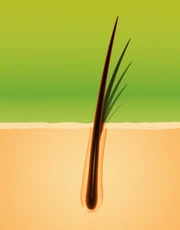
Follicle: The tiny structure in the skin that grows a hair.
Folliculitis: Inflammation or infection of the hair follicles, causing small red or white-headed spots. See Scalp folliculitis.
Folliculitis decalvans: A rare, scarring form of folliculitis with repeated crops of pustules and tufts of hair. See Scarring alopecia.
Fragilitas crinium: The medical term for fragile hair that splits and breaks along its length. See Hair breakage.
Frontal fibrosing alopecia: A scarring hair loss that makes the front hairline recede, often with eyebrow loss, mostly after the menopause.
G
Grey hair: Hair that has lost its pigment. Mainly down to genes and age; smoking and some deficiencies are linked with earlier greying.
H
Hair cycle: The repeating stages each hair goes through: growing (anagen), transition (catagen), resting (telogen) and shedding (exogen).
Hair shaft: The part of the hair you can see, above the skin. It isn’t alive, so it can’t repair itself.
Head lice: Small insects that live on the scalp and lay eggs (nits) on the hair, causing itching.
Hirsutism: Extra dark, coarse hair growth in women in a male pattern, such as on the face or chest. It can be a sign of PCOS. See PCOS hair loss.
Hormonal hair loss: Thinning or shedding linked to hormones, such as after pregnancy, around the menopause, or with PCOS or thyroid problems. See Hair loss in women.
I
Iron deficiency: Low iron, a common cause of tiredness and hair shedding. It can happen with or without anaemia. See Iron and hair loss.
Itchy scalp: A symptom with many causes, from dandruff and product reactions to psoriasis and head lice.
J
JAK inhibitors: A newer group of tablets that can regrow hair in some people with severe alopecia areata, prescribed by a dermatologist. See Alopecia totalis and universalis.
Jojoba oil: A plant oil similar to the scalp’s own sebum, used in some hair and scalp products.
K
Keratin: The tough protein that hair, nails and the outer layer of skin are made of.
Keratin treatment: A salon treatment that smooths and straightens hair for several months.
Keratosis pilaris: Small, rough bumps around hair follicles, mostly on the upper arms and thighs. Harmless.
L
Lanugo: Fine, soft hair that covers a baby before birth.
Lichen planopilaris: An inflammatory condition that causes redness and scale around the hairs and scarring hair loss. See Scarring alopecia.
Low-level laser therapy: Red-light devices, such as caps and combs, sold for hair loss. Some studies show a modest benefit for pattern hair loss; results vary.
Ludwig scale: A scale used to describe how advanced female pattern hair loss is, from mild thinning at the parting to extensive thinning on top. See Female pattern hair loss.
M
Madarosis: The medical name for loss of eyebrow or eyelash hair. See Eyebrow hair loss.
Malassezia: A yeast that lives on everyone’s scalp. It plays a part in dandruff and seborrhoeic dermatitis. See Seborrhoeic dermatitis.
Melanin: The pigment that gives hair and skin their colour.
Menopause hair loss: Thinning that often starts around the menopause, as hormone levels change.
Microneedling: A treatment that makes tiny punctures in the scalp. There’s some early evidence for pattern hair loss, mostly alongside other treatments.
Miniaturisation: The gradual shrinking of hair follicles in pattern hair loss, so they grow finer, shorter hairs.
Minoxidil: A lotion or foam for pattern hair loss, and sometimes a prescribed tablet. It doesn’t work for every type of hair loss. See Minoxidil myths and facts.
N
Nits: The eggs of head lice, and their empty shells, stuck to the hair close to the scalp. See Head lice.
Non-scarring alopecia: Hair loss in which the follicles survive, so hair can regrow, as in telogen effluvium and alopecia areata.
Norwood scale: A scale used to describe how advanced male pattern hair loss is, from a slightly receding hairline to extensive baldness. See Male pattern hair loss.
O
Oestrogen: A female hormone that helps keep hair in its growing phase. Falling levels after pregnancy and around the menopause can affect hair.
Oily scalp: A scalp that makes a lot of sebum, so hair looks greasy soon after washing.
P
PCOS (PMOS): Polycystic ovary syndrome, renamed polyendocrine metabolic ovarian syndrome in 2026. A hormonal condition that can thin the hair on top of the head. See PCOS hair loss.
Postpartum hair loss: Heavy shedding a few months after having a baby. It’s temporary.
Protein overload: Hair that feels stiff, straw-like and snaps easily after too many protein-rich hair products.
Pseudopelade of Brocq: A rare, slowly spreading scarring hair loss with small, smooth patches and little redness. See Scarring alopecia.
Psoriasis: A condition that causes raised, red patches covered in thick, silvery scale, often on the scalp. See Scalp psoriasis.
R
Receding hairline: A hairline that moves back from the forehead or temples. In men it’s usually male pattern hair loss; in women it can be frontal fibrosing alopecia or traction. See Male pattern hair loss.
Ringworm (tinea capitis): A fungal infection of the scalp that causes scaly patches and broken hairs, mostly in children. It needs treatment from a GP. See Scalp ringworm.
Root sheath: The layers of cells that surround and hold the hair inside the follicle.
S
Scarring alopecia: A group of conditions in which inflammation destroys hair follicles, so hair can’t regrow in those areas.
Seborrhoeic dermatitis: A common scalp condition causing redness and greasy, yellowish flakes, often also on the face and behind the ears.
Sebum: The natural oil made by glands in the skin, which keeps the scalp and hair supple.
Split ends: The fraying of the hair tip when the cuticle wears away. They can only be cut off, not repaired.
T
Telogen: The resting phase of the hair cycle, lasting about three months, before the hair falls out.
Telogen effluvium: Heavy shedding from all over the scalp two to three months after a trigger such as illness, stress, childbirth or a crash diet. Usually temporary.
Terminal hair: The thick, pigmented hair of the scalp, eyebrows and, after puberty, the body.
Traction alopecia: Hair loss caused by long-term pulling from tight hairstyles, extensions or braids, usually at the hairline.
Trichologist: A specialist in the hair and scalp. Trichologists diagnose and treat hair and scalp problems and work alongside GPs and dermatologists. See What a trichologist does.
Trichology: The study of the hair and scalp, and the care of their problems. See How to become a trichologist.
Trichoptilosis: The medical name for split ends. See Split ends.
Trichorrhexis nodosa: Weak points along the hair that look like tiny white nodes, where the hair breaks easily. Usually caused by damage. See Hair breakage.
Trichotillomania: A condition in which someone feels an urge to pull out their own hair, causing patchy loss.
U
UV damage: Weathering of the hair by sunlight, which makes it dry, faded and more fragile.
V
Vellus hair: Short, fine, pale hair that covers most of the body. In pattern hair loss, scalp hairs gradually become more like vellus hairs.
Vitamin D deficiency: Low vitamin D, common in the UK in winter, and often found in people with hair loss. See Vitamins for hair growth.
W
Wet hair: Hair stretches more and breaks more easily when wet, so it needs gentle combing.
Wigs and hairpieces: Ways of covering hair loss, from full wigs to toppers. Some are available on the NHS.
X
Xerosis: The medical word for dry skin, including a dry scalp. See Dry scalp.
Y
Yeast: Malassezia yeast lives on the scalp and plays a part in dandruff and seborrhoeic dermatitis. See Dandruff.
Z
Zinc deficiency: Low zinc, which can cause hair shedding. Too much zinc from supplements can cause problems too. See Vitamins for hair growth.
Zinc pyrithione: An anti-yeast ingredient used in many anti-dandruff shampoos. See Dandruff.
Let’s find out what’s going on
Book online at a time that suits you. If you have a question first, send me a message.